

Discover the Financial Support Available for Purchasing Adaptive Bikes
Temps de lecture : 3 min • Jul 28, 2026
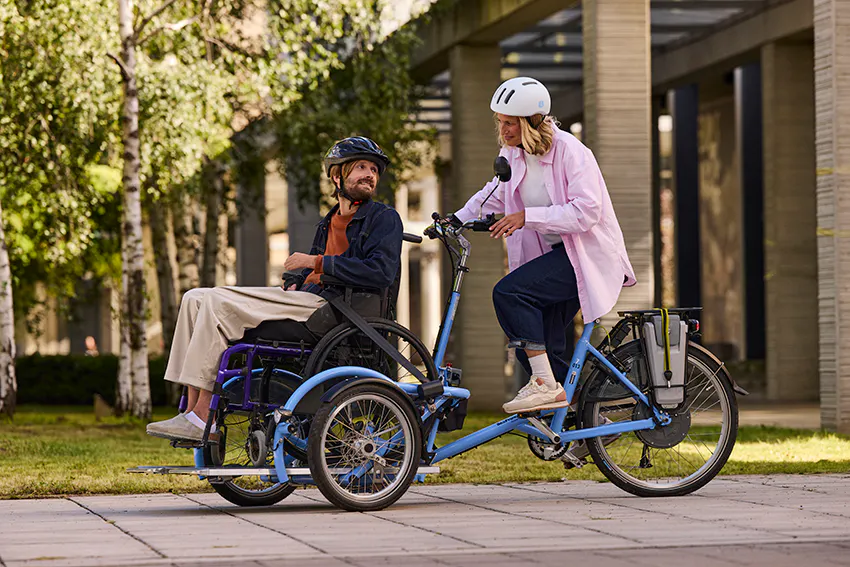
Adaptive bikes are designed for people who can’t use a standard bicycle for health reasons, who need extra support to maintain stability and confidence, or who ride with a caregiver.
The different types of adaptive bikes
Adaptive bikes include specific technical features that compensate for reduced mobility or functional limitations. The main models include:
- Tricycles, offering excellent stability
- Low‑step or low‑seat bikes, making it easier to get on and off when balance is an issue
- Tandems, allowing a rider to cycle with a companion
- Handcycles, powered using the arms
- Recumbent tricycles, providing a reclined position to reduce postural strain
Unlike standard bicycles, adaptive bikes prioritize safety, comfort, and accessibility, with features such as ergonomic seats, support systems, adapted handlebars, and modified cranksets.
Their purpose is to make active mobility accessible to as many people as possible, promoting inclusive cycling for daily travel, leisure, or rehabilitation.
Financial Support from Île‑de‑France Mobilités
After your Véligo Location subscription, if you want to continue cycling, several financial supports are available to help you purchase your own adaptive bike.
Île‑de‑France Mobilités offers a subsidy of up to €1,200, covering up to 50% of the purchase price of the adaptive bike and its handling accessories. For more information, you can visit this page.
If you have already bought your adaptive bike, you can also apply for reimbursement by creating your account here.
Other Financial Support for Purchasing an Adaptive Bike
In addition to the Île‑de‑France Mobilités subsidy, several other schemes can help finance your adaptive bike:
- The MDPH (Departmental House for Disabled Persons) may provide funding through the PCH (Disability Compensation Benefit) if the bike is considered an essential technical aid for autonomy. The amount depends on the applicant’s file. To find out what you may be eligible for, visit this page.
- AGEFIPH and FIPHFP (for private‑ and public‑sector employees) can finance an adaptive bike used for professional travel. The maximum amount can reach €12,000 over 12 months.
- Some health insurance providers and mutual funds offer partial or fixed reimbursements for adaptive bikes. You must check directly with your provider.
- The City of Paris also offers financial support, covering up to 50% of the bike’s price, capped at €1,500. To apply, visit this page.
If you want more information about the support available depending on your municipality, you can visit this website— keeping in mind that some information may not be fully up to date.
These articles may interest you
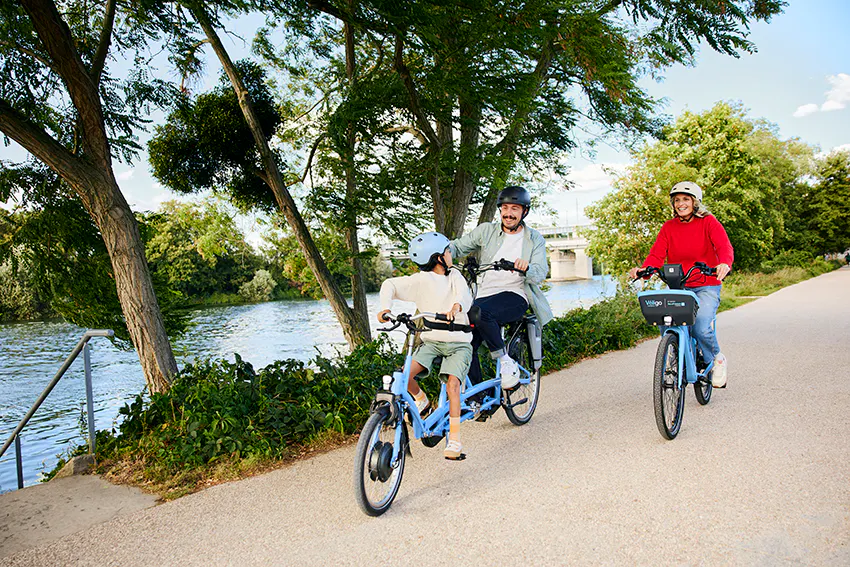
A new range of adapted bikes for more inclusive mobility
Last January, Véligo Location took an important step forward by launching a new range of adapted bikes designed for people who cannot use a standard bicycle for health-related reasons.